SUMMITS
SUMMIT Nº 36: KNEIFF (LUXEMBOURG)
GRAND DUCHY OF LUXEMBOURG

KNEIFF

10/10/2026
ALTITUDE
560 m

ANDREU LÓPEZ AND ÀLEX PORTERO

DIFFICULTY LEVEL
LOW
Journey to the Heart of Europe
The alarm rings at 7:00 a.m. It is Saturday, 10 October, and the weeks since I set off for Russia (Elbrus) on 5 September have been full of emotions and intense experiences. Our Caucasus expedition was a success, culminating in the summit of Europe and an overland departure from the country that proved to be a remarkable experience for both the soul and the senses.
After returning home, I had a week to work flat out and get as much done as possible. The following week I was scheduled for eye surgery, which forced me to take seven to ten days off work. Surgery—particularly eye surgery—always comes with a degree of uncertainty and anxiety, so those were not easy days. Although I tried to return to work gradually, my working hours were extremely intense because of my heavy workload.
But the here and now are different. We are up early for a good reason: Luxembourg. At 8:15 a.m. I arrive in Sant Just Desvern to pick up Àlex Portero, my travelling companion on this three-day trip to the Grand Duchy. Àlex is a long-standing close friend: we met around 2011 through work and have kept in touch ever since. That is especially commendable on his part, as his family has grown in recent years with the arrival of Paula and Gerard.
The Grand Duchy of Luxembourg is one of Europe’s smallest countries and the world’s only sovereign grand duchy. Located in the heart of Western Europe, it borders Germany, Belgium and France. Despite its small size, it is a global economic powerhouse with one of the world’s highest GDP figures per capita. It is also distinguished by its three languages—Luxembourgish, French and German—and its multicultural character: nearly 50% of its residents are foreign nationals. The capital is Luxembourg City, home to around 140,000 of the country’s almost 700,000 inhabitants (2026 census figures).
Luxembourg is a unitary constitutional parliamentary monarchy whose head of state is Grand Duke Guillaume V of the Nassau-Weilburg dynasty. It is a founding member of the European Union, NATO, the United Nations and Benelux, while Luxembourg City is one of the three official seats of the European institutions.
Our flight departs on time at 10:40 a.m. from Terminal B at Barcelona–El Prat Airport. We are flying with Ryanair, the same airline that took us to San Marino last year, when Àlex made his debut in the TSOW project.
The plane lands in the Grand Duchy on schedule at 12:30 p.m. Since we cannot collect our rental car until 1:00 p.m., we take the opportunity to have a quick lunch.
Àlex has chosen AVIS. I used Hertz in Norway, so I suspect my friends at Europcar are starting to worry after being TSOW’s preferred transport provider for so many consecutive trips. Financial decisions on this journey—booking the hotel, car and flights—have fallen within Àlex’s remit, while the writer of these lines has been entrusted with planning our activities.
My eye operation was recent, so I ask Àlex whether he minds driving the SKODA we have been assigned. At around 1:30 p.m. the engine starts and we head for Éislek in the Luxembourg Ardennes. This region covers the northern third of the country and is famous for its dense forests, extensive hiking trails—up to 1,900 kilometres—and rich historical heritage, including numerous spectacular medieval castles.
At around 3:00 p.m. we stop beside a monument dedicated to American soldiers who fought in the Second World War. The country has maintained a brotherly bond with the United States since American forces liberated it from Nazi occupation in September 1944. The gratitude runs so deep that towns in the Ardennes such as Clervaux, Wiltz and Ettelbruck have squares, displayed military tanks and monuments where the American flag flies permanently.
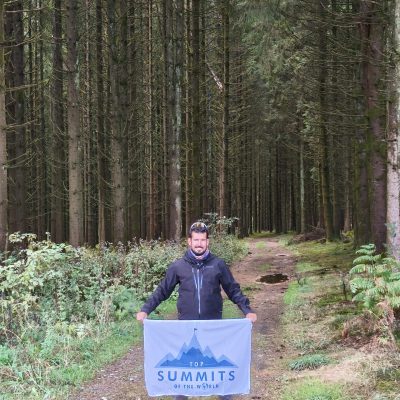
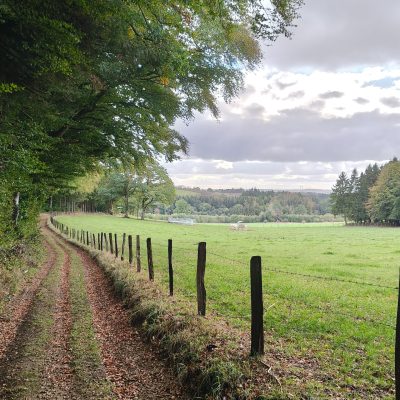
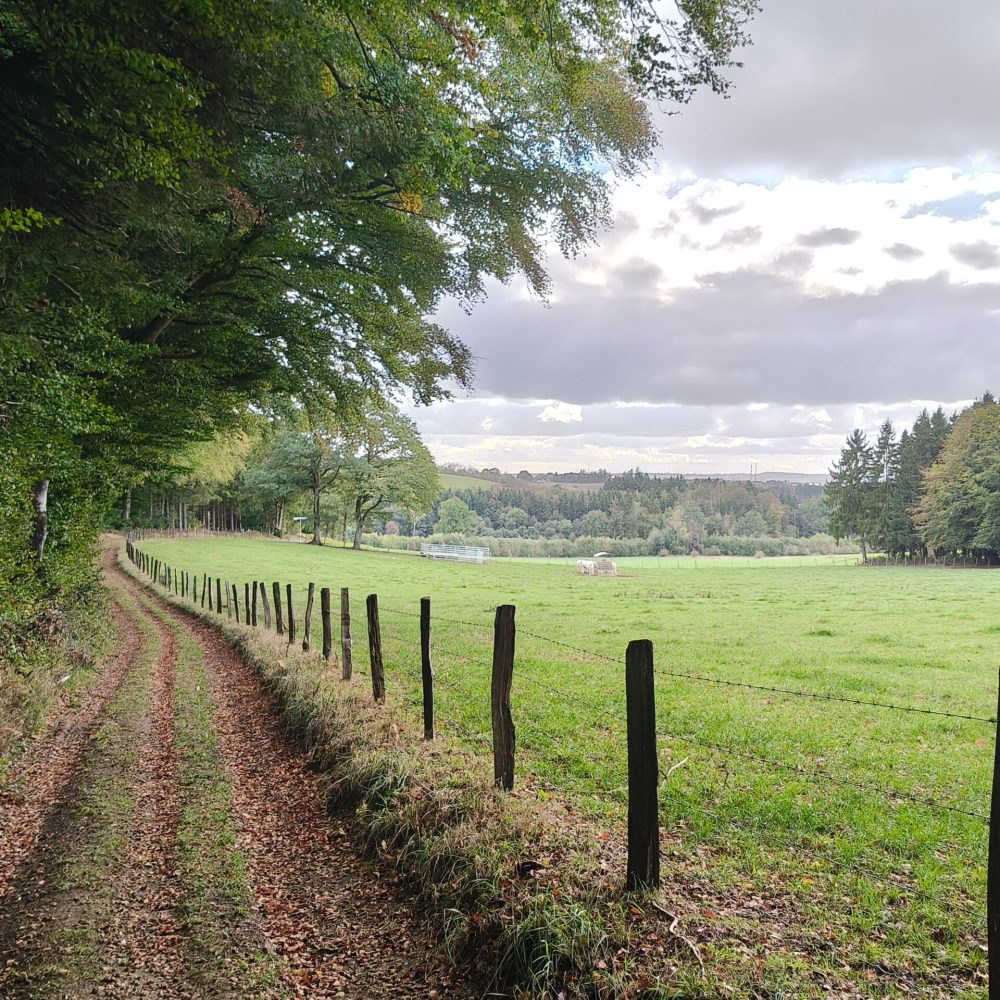
We enjoy a pleasant walk of about an hour, completing the five-kilometre circular route I have planned, with virtually no elevation gain. Conversation flows easily with a great friend as dense woodland, cultivated fields and cows—lots of cows—pass before our eyes. A dozen of them give us a magical moment when they approach so closely that we can almost touch them.
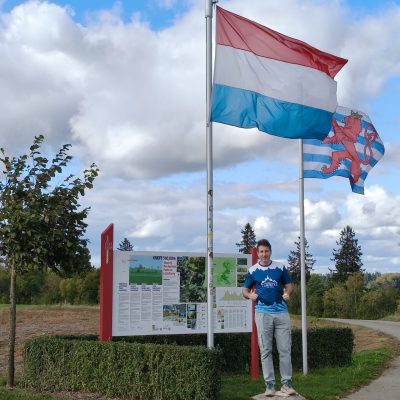
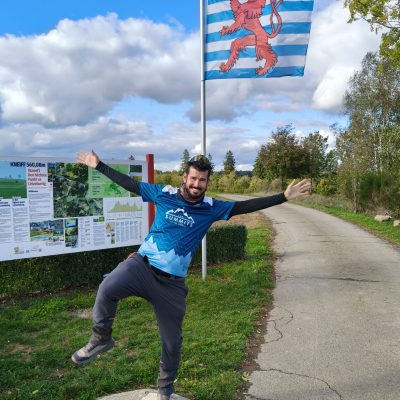
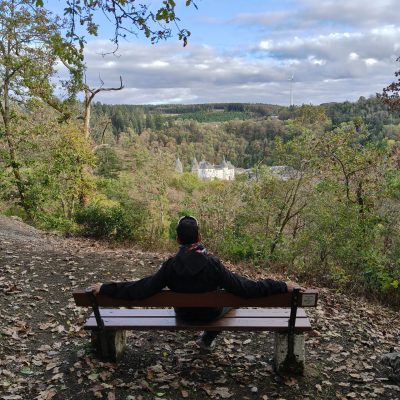
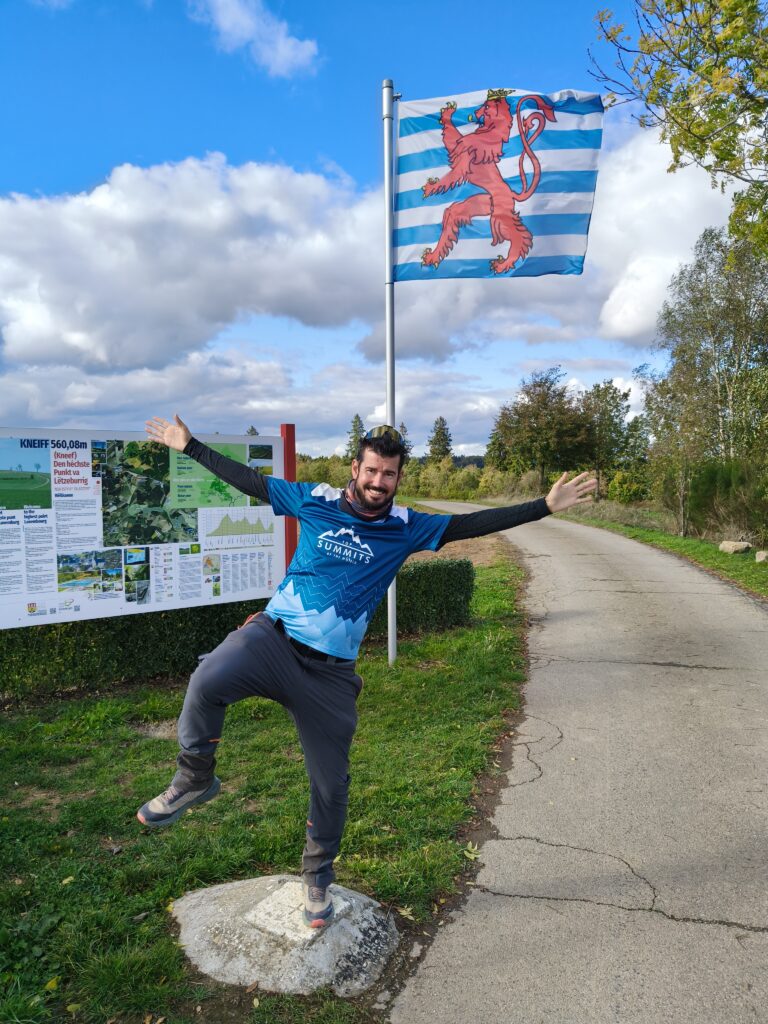
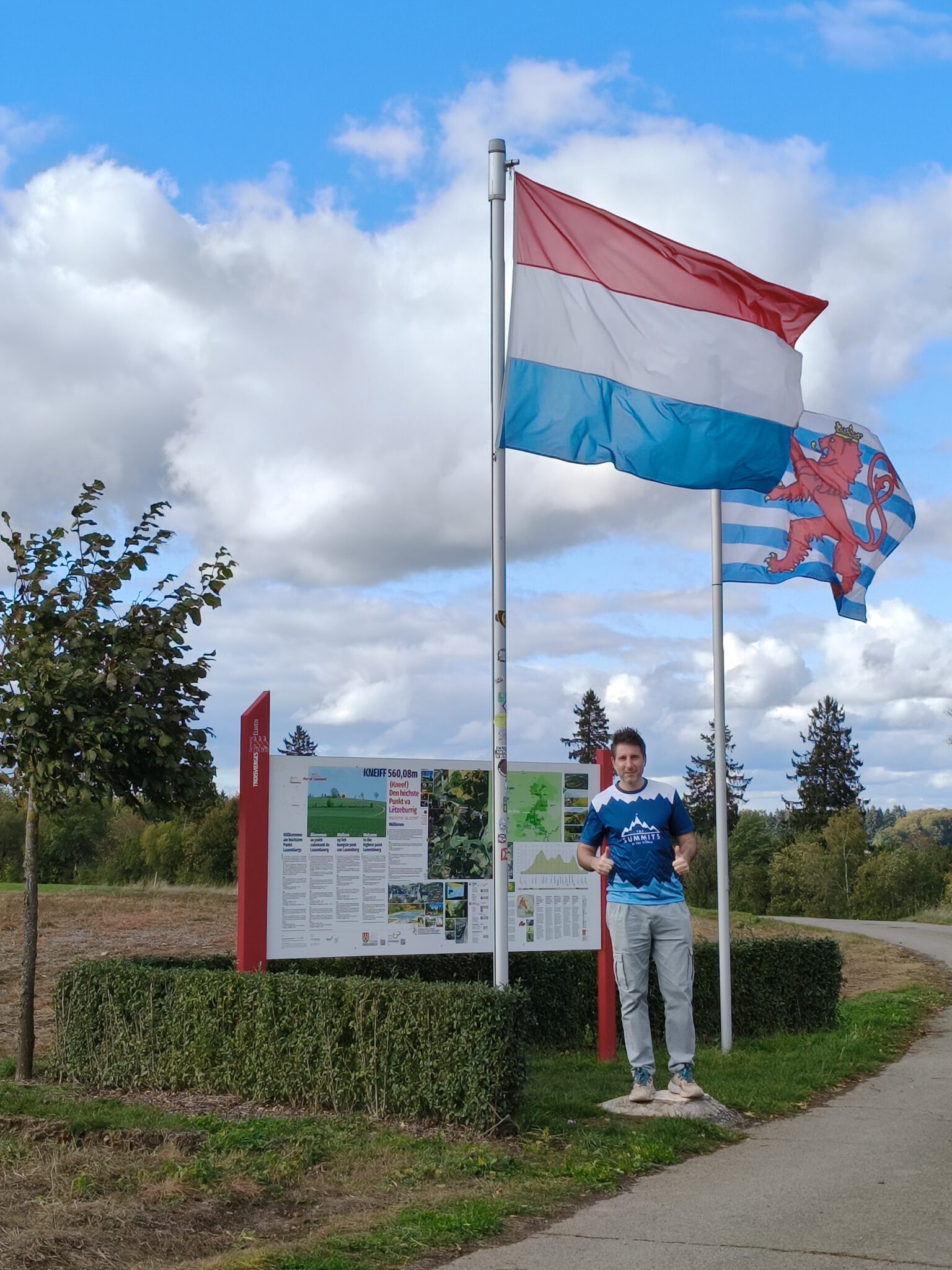
After this welcome gift from the animal kingdom, we spot two flags on the horizon at the top of a gentle slope: the national tricolour and the civil ensign popularly known as the “Red Lion”. There are no major climbs or technical difficulties, but we bring the same enthusiasm as ever as we add another flag to the project. Kneiff is our 36th national high point—the second I have shared with my mate Àlex—and proof that every country, regardless of altitude, has a story worth discovering. At a modest 560 metres, Kneiff requires little time to reach, leaving us plenty of daylight to explore more of Luxembourg, particularly the medieval castles of the Ardennes.
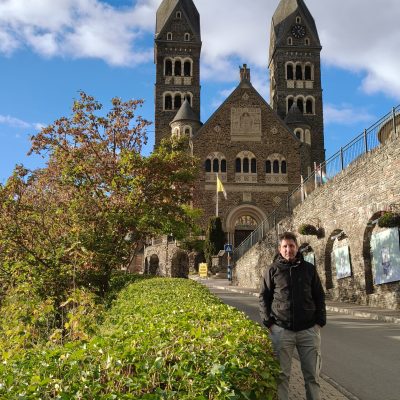
Our second stop of the day is Clervaux, a small, charming town nestled in a valley. It has a castle housing a photographic exhibition included in UNESCO’s Memory of the World Register, a lovely Romanesque church and an abbey on the outskirts.
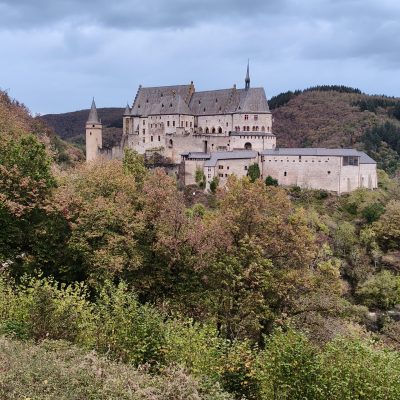
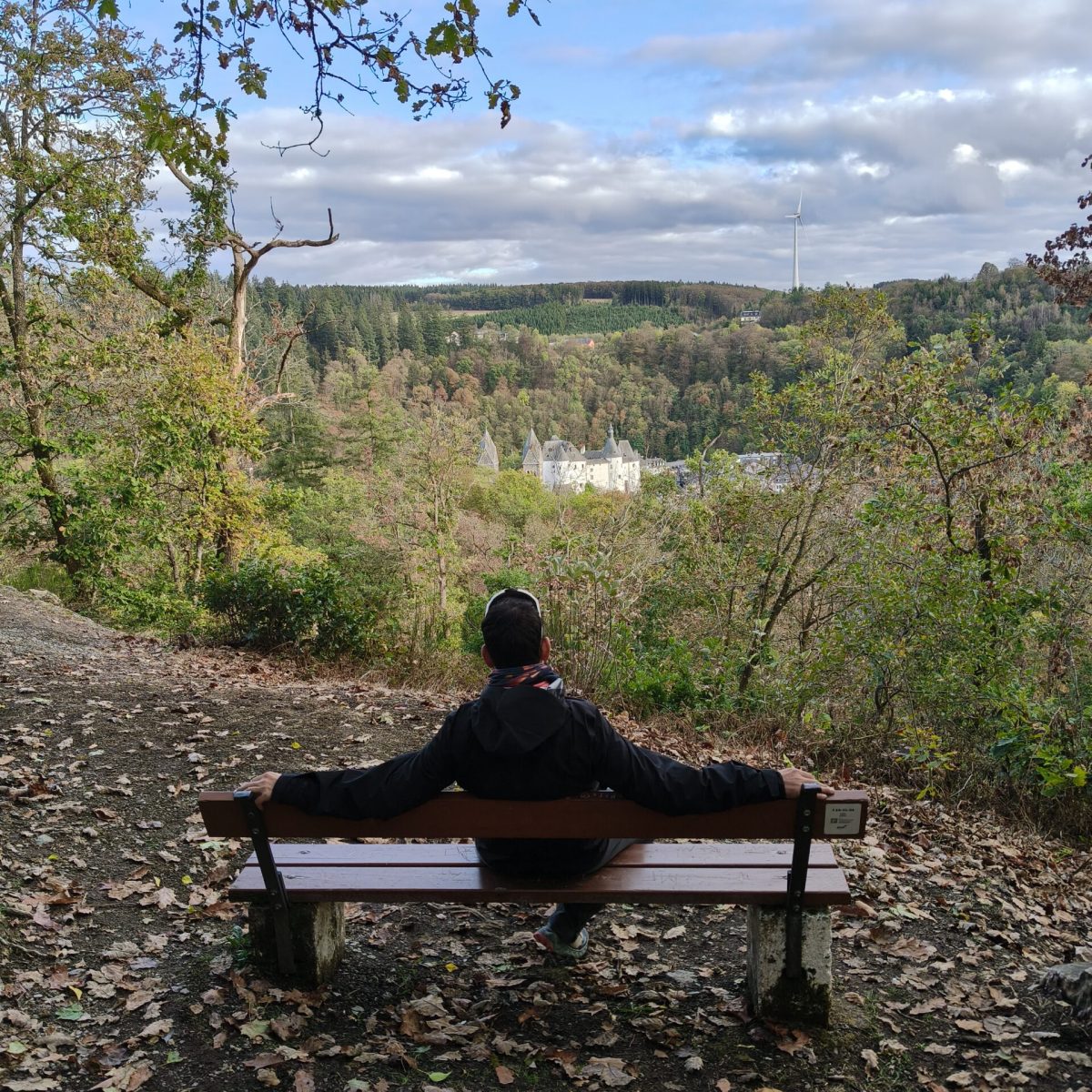
Without rushing, but without stopping for long, we head for our third objective: the spectacular Vianden Castle, which dominates the Our Valley and is probably the most striking sight in the Éislek region. We only partially achieve this sightseeing goal: sunset at 7:15 p.m. leaves us almost without daylight, so we have to “settle” for admiring the castle from afar.
The fading light prompts us to head for Hotel Simon’s Plaza in Grevenmacher, in the east of the Grand Duchy, about fifteen minutes from Luxembourg City. This was the expedition finance director’s choice. With lower prices than in the capital and free parking, Simon’s Plaza offers excellent value for money. Its restaurant serves us a delicious dinner, while breakfast and drinks from the minibar are included in the room price.
Before going to sleep, I read the sports and nature magazine Oxígeno for a while. I find it rather disappointing and doubt I will buy it again. After reading, I prepare tomorrow’s itinerary: Luxembourg’s Little Switzerland awaits.
Punctual as ever, Àlex knocks on the door of room 207 at 8:00 a.m. His travelling companion opens up, and we go down to breakfast together. We have booked separate rooms to give each other some breathing space: when there are only two people in a group, moments of independence and privacy are important.
Breakfast is generous and the hotel staff—like everyone we have met in the country—are very friendly. I explain the day’s schedule to Àlex. It is packed with activities, although the journeys between them will be short thanks to the Grand Duchy’s compact size.
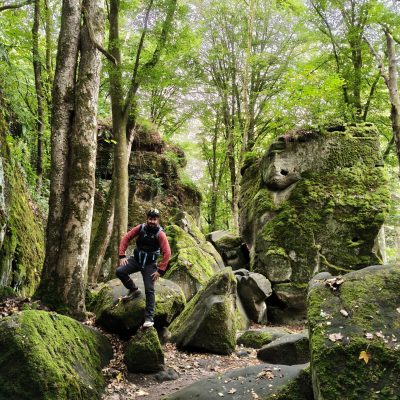
At 9:30 a.m. we reach Echternach, one of the main towns in the Müllerthal region, also known as Luxembourg’s Little Switzerland. This natural paradise in the east of the country is famous for its fairy-tale forests, sandstone gorges and waterfalls. I suggest a circular hike of about fifteen kilometres with 300 metres of cumulative elevation gain (route E1), starting in Echternach, reaching almost as far as Berdorf and returning to our starting point.
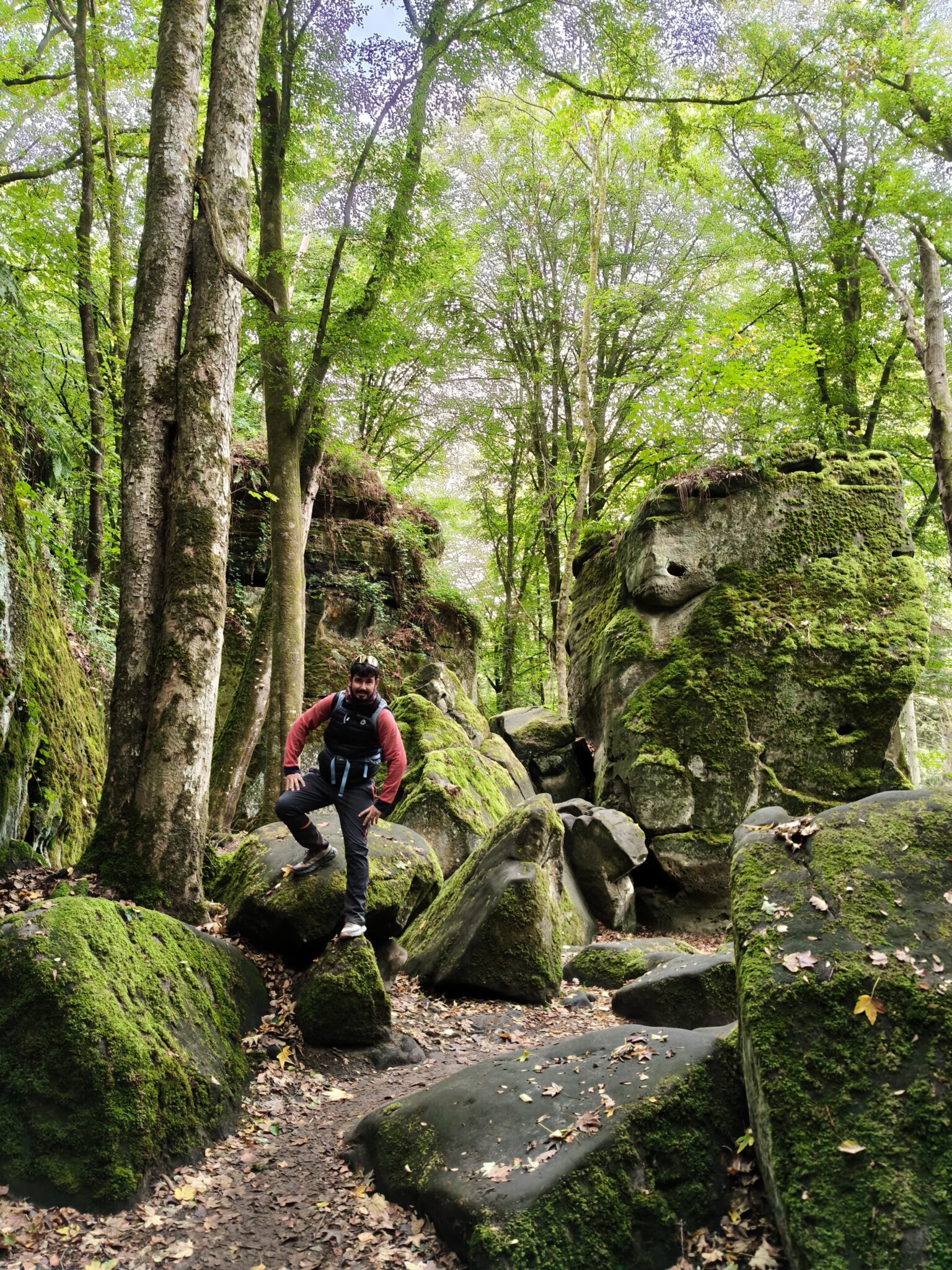
We are pleasantly surprised by the beauty and drama of the landscape: lush forests, gorges and rock formations, narrow clefts between cliffs that we walk through, streams running alongside the path and, above all, tranquillity—so much tranquillity in both nature and human surroundings. The Luxembourgish people are notably courteous and considerate. Our morning walk is wonderful, although nearly four and a half hours on the trail leave us hungry. We choose an Italian restaurant that will certainly not go down in history for its quality.
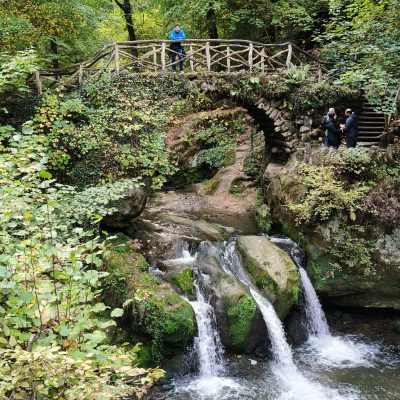
Our second stop is Schiessentümpel waterfall, an iconic image of the region: a small stone bridge beneath which the water tumbles in three separate cascades. As the expedition’s hiker and explorer of national high points, I am responsible for planning, and I decide to go beyond the quick photo stop favoured by most tourists. I map out a 5.25-kilometre circular walk with 100 metres of ascent (route W6), ending at the waterfall. It takes us an hour and a half of the afternoon.
It is 5:30 p.m. and, although we have already packed a great deal into the day, we remain faithful to the saying “good things come in threes”. Our third stop follows a recommendation from the Echternach tourist office. It is hardly a bullseye, but not everything in life can turn out perfectly. Larochette Castle and the bars run by Portuguese owners—Luxembourg has a large Portuguese immigrant community—are not enough to make the visit worthwhile.
Sunset and the fatigue of a busy day take us back to Hotel Simon’s Plaza. On Sundays the country seems to grind to a halt, and the hotel restaurant is closed. After a short rest in our respective rooms, we head to one of the few restaurants open in the area. We do not linger: we have spent practically the whole day on the move. Room 207 is calling!
Before closing my eyes, I read Oxígeno for a while and spend some time scrolling through social media. After two days devoted to Luxembourg’s landscapes and castles, the countryside will give way to the city: tomorrow we will explore the capital.
It is eight in the morning when Àlex calls at room 207. We go down to the hotel dining room, where there are few other guests, and have breakfast. As we eat, we discuss how to organise the day and decide to park in the city centre, close to the main tourist attractions.
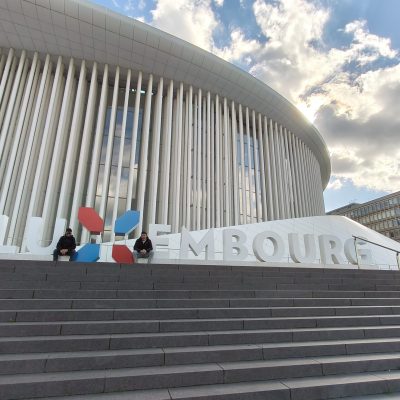
Our walk begins in Kinnekswiss Park, the largest park in the city. Locals use it to relax, sunbathe, run, cycle and take their children to play on a huge ship converted into a playground, among many other things. By chance we find ourselves at the Tourist Office in the beautiful Place Guillaume II. There we obtain a map outlining a two-to-three-kilometre walking route past the city’s main landmarks: Notre-Dame Cathedral, the Grand Ducal Palace, Adolphe Bridge, the Chemin de la Corniche—a 600-metre elevated walkway with magnificent views over the Grund district—and the Bock Rock and Bock Casemates. The latter is where Luxembourg’s history began: Count Siegfried established Lucilinburhuc Castle there in 963. The underground galleries are one of the city’s essential sights and should not be missed.
Having completed the Tourist Office’s suggested route, and as it is only just after noon, we decide to continue walking towards the Pfaffenthal district. Although we do not linger there, we make use of the panoramic lift and the funicular to continue our journey. We leave medieval Luxembourg behind and enter the Luxembourg that helps shape Europe’s future: we have arrived in Kirchberg, the European quarter.
Kirchberg lies in the north-east of the capital and is home to major institutions including the Court of Justice of the European Union, the Secretariat of the European Parliament—which houses various administrative and operational services—the European Investment Bank (EIB), the EU’s financial institution, and the European Court of Auditors, which scrutinises the Union’s accounts.
Before visiting the European institutions, our bodies need some fuel. We reach a shopping centre with plenty of tempting dining options—Persian, Lebanese and Asian restaurants all catch my eye—but none appeals to Àlex. We end up on more familiar culinary ground: an Italian restaurant will serve the final meal of our Luxembourg adventure.
The origins of the European Union go back to the aftermath of the Second World War, when the aim was to secure peace, reconciliation between historic enemies such as France and Germany, and economic prosperity across the continent. Key milestones include the Schuman Declaration of 1950 and the establishment in 1951 of the European Coal and Steel Community (ECSC). Luxembourg was one of its six founding countries, alongside Belgium, the Netherlands, West Germany, France and Italy. We refresh our memories of all this and more during our visit to the European Parliament, which also has seats in Brussels and Strasbourg.
It is time to retrace our steps and keep our SKODA company: after so many hours alone, it must be feeling terribly bored and abandoned. We reach the car at around 4:00 p.m. and drive from the car park to the airport in about twenty minutes. Before returning it, we must fulfil our obligations. With the tank full, we hand the keys to the AVIS staff, and all that remains is to wait patiently for Ryanair’s wings to carry us home.
Luxembourg has taught us that a country can be small and still achieve great things. Despite its modest size, it has turned its geographical location, economic openness and cultural diversity into powerful engines of prosperity. It is a major international financial centre, a competitive and cosmopolitan economy, and a place where many languages and nationalities coexist. Luxembourg is also profoundly pro-European, one of the driving forces behind European integration and home to numerous EU institutions. Landlocked between Germany, France and Belgium, it has managed to extend its influence far beyond its borders.
Small in size, great in ambition and extraordinary in international reach. Luxembourg is not merely in the geographical heart of Europe: it is also one of the places where Europe’s spirit beats most strongly.
GALLERY