
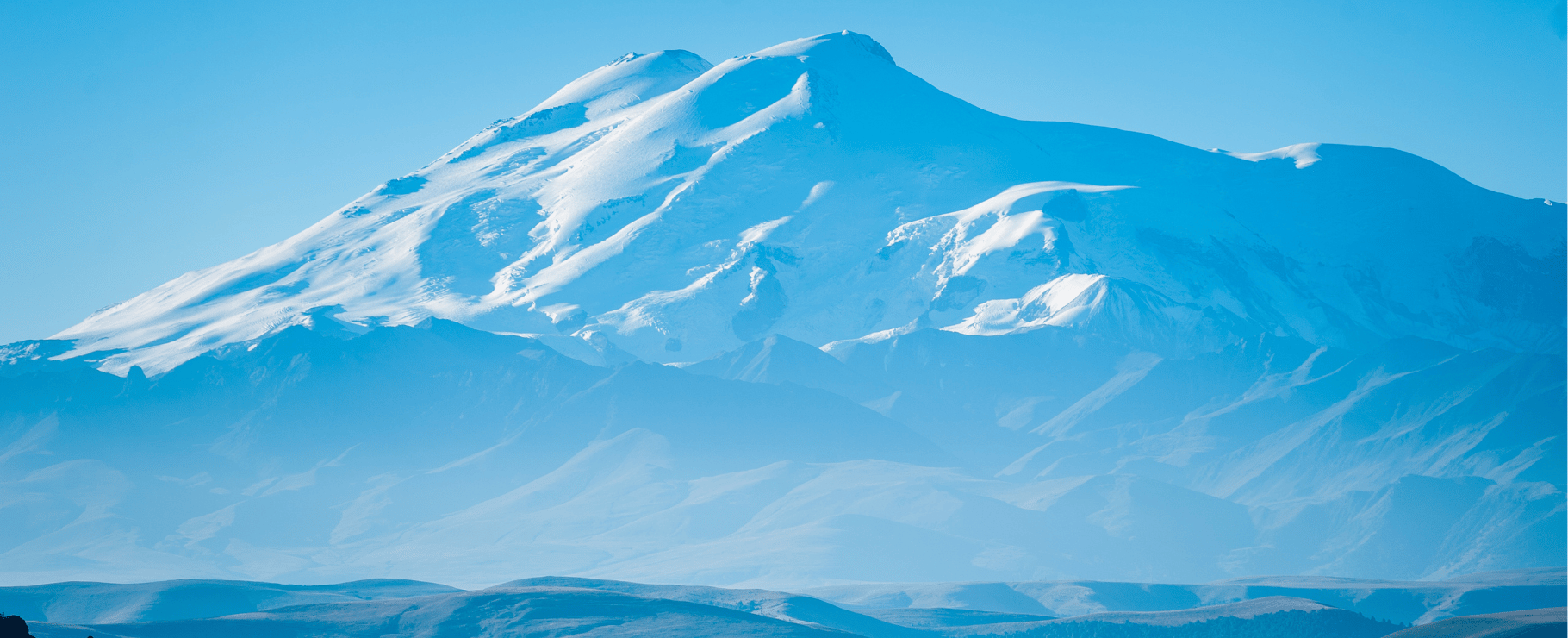
Home » Tips for Traveling to Russia: Everything We Learned on Our Elbrus Expedition
Tips for Traveling to Russia: Everything We Learned on Our Elbrus Expedition
A fascinating and complex country that demands extra preparation before you set foot in it
At Top Summits of the World, we’ve just lived through one of the most intense and unexpected experiences in our history: the ascent of the Elbrus, the roof of Europe, with its 5,642 meters of altitude and all the logistical, human, and political complexity that surrounds a trip to the Russian Federation.
Russia is not France, nor Italy. It’s not Norway or Morocco either. It’s a country with its own rules, its own system, and its own restrictions that have little in common with what we know in the Western world. Traveling unprepared can turn an adventure into a serious problem. That’s why, in this article, we want to share everything we learned on the ground so that, if you’re considering visiting this Eurasian giant, you go with your eyes wide open and your backpack properly packed.
Bring everything printed on physical paper. Everything.
This is the first piece of advice and probably the most important. In Russia, they do not accept documentation in digital format. Showing your plane ticket on your phone won’t work, nor will a PDF of your insurance, nor the accommodation confirmation in your email.
From the very first moment we checked into the hotel, it became absolutely clear: Russians want documentation on physical paper, full stop. No exceptions, no negotiations.
Before leaving home, print and organize in a well-ordered folder:
- Plane tickets (outbound and return, and all connecting flights)
- Accommodation bookings for every night of the trip
- Travel insurance, with specific coverage for mountain activities if you’re heading to Elbrus
- Medical certificate for any medications you’re carrying, especially if you have altimeters, anticoagulants, or any medication that might raise questions at checkpoints
- Visa and all documentation processed for entry into the country
- Contact details for the local agency or guide who will receive you
Don’t leave it to the last minute. Print well in advance and bring copies of everything.
Cash: enter the country with foreign currency
European credit and debit cards do not work in Russia. Visa, Mastercard, and American Express have been blocked since the international sanctions, and one of the most revealing moments of the trip was that first happy card payment when crossing back into Georgia — one of the smallest yet greatest joys we’ve experienced on any trip.
The right strategy is to enter the country with euros or dollars in cash and exchange them for rubles once inside. Currency exchange works without problems at airport and city exchange offices. The ruble is not a convertible currency outside Russia in most countries (though there are exceptions, such as in neighboring countries like Georgia).
Some practical tips:
- Calculate carefully how much money you’ll need for all the days of the trip, including accommodation, food, local transport, mountain fees, and any unexpected expenses
- Bring bills in good condition. Heavily worn notes may be refused at exchange offices
- Split your cash across different locations in your backpack and clothing for security
- The cost of living in rural and mountain areas is considerably lower than in Moscow or Saint Petersburg, so if your trip is specifically to Elbrus, you won’t need large amounts
Communications: be prepared to be disconnected
This is one of the realities that most surprises Western travelers: in Russia, you cannot buy a local SIM card as a foreign tourist as easily as in other countries. If you don’t have WiFi available, you have no way to communicate.
Some things you should know:
- WhatsApp sometimes works, sometimes doesn’t. Availability is inconsistent and can vary by area and time. Don’t rely on it as a dependable communication channel
- Many Western websites and apps are blocked or restricted: social networks, Google services, streaming platforms, and many tools we use daily may not be available
- Hotel WiFi is practically the only stable means of connection. Use it to the fullest whenever you have access, to download offline maps, confirm bookings, and let people know how you’re doing
- Download offline maps before you leave, both for the cities you’ll visit and the Elbrus area. Once in the mountains, there will be no signal of any kind
- Let your family or trusted people know that there will be days when you won’t be able to communicate. Establish a clear protocol before departure: if they don’t hear from you in X days, what is the next step
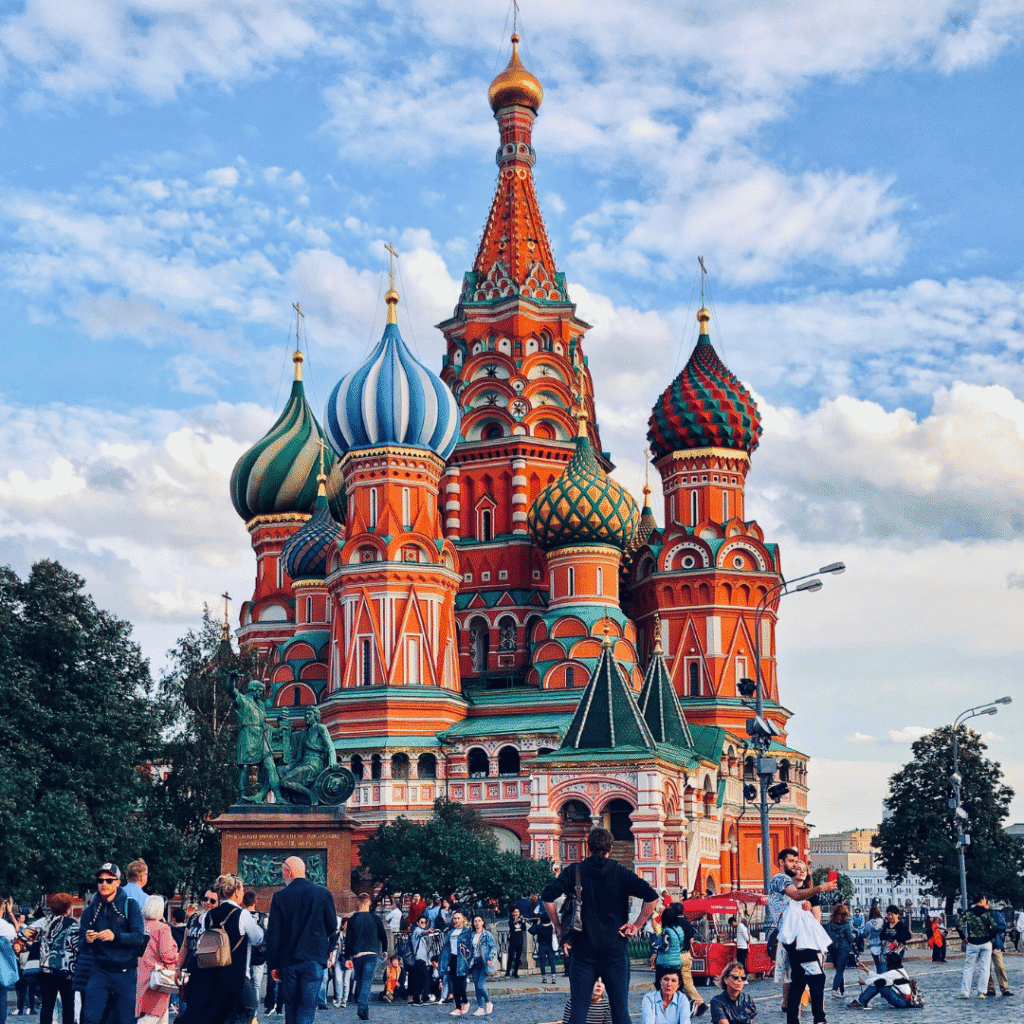
Go with a local agency: it’s not a luxury, it’s a necessity
Traveling to Russia completely independently is possible, but we don’t recommend it, especially if your goal is Elbrus. A local agency that manages your visit has a value that goes far beyond mere convenience:
- They watch over and protect you. In a country with such a particular system, having a local contact who knows the rules, the circuits, and the right people is a real and tangible advantage
- They know the local circuits and have established relationships with guides, transport providers, accommodation, and local authorities. Things that would be complicated for a Western tourist are routine for them
- The Russian visa requires it. To process a tourist visa, you must submit, among other documents, an invitation letter from a Russian entity. A local agency handles this for you
- They manage the unexpected. When our outbound flight was canceled without notice, it was the local network of contacts that organized our exit by road across the Caucasus. Without that support, the situation would have been considerably more complicated
Avoid talking about politics: a golden rule
Throughout an entire week in Russia, not one of the people we encountered brought up the war or the country’s political system. The silence was total, consistent, and revealing.
The Russian people you’ll meet, especially in the mountain areas, are generous, kind, hospitable, hardworking, and noble. They will take care of you, share their table with you, and do everything possible to make you feel welcome. But they are people living within a very closed system, and openly discussing the country’s limitations, the war, or politics is terrain you should avoid entirely.
It’s not hypocrisy — it’s survival. Respect it. Enjoy the human quality of the people around you without pressing on a wound that is a reality they didn’t choose and that they carry every day.
Elbrus: always go with a guide
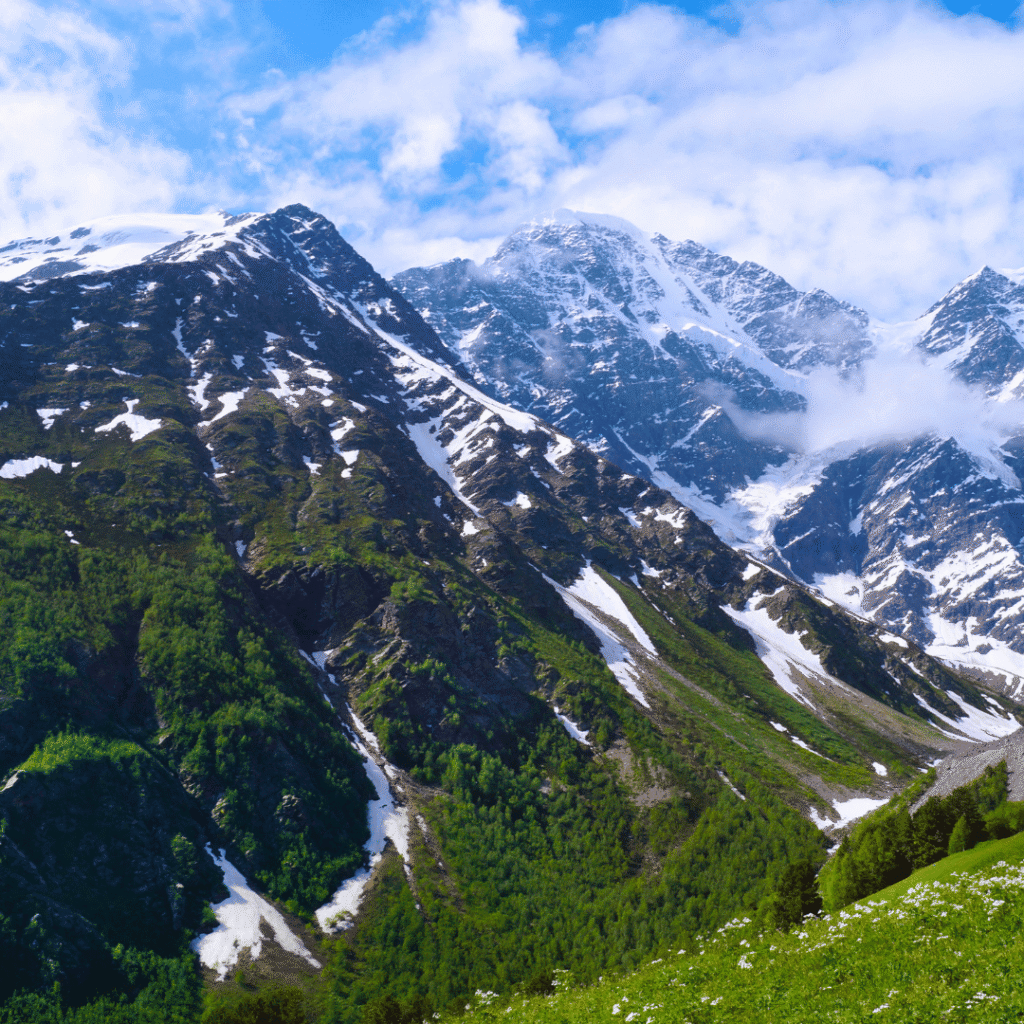
Elbrus is the roof of Europe at 5,642 meters of altitude and, although technically it is not an extremely complicated mountain, it is a mountain that demands respect and preparation. Going without a guide is not recommended.
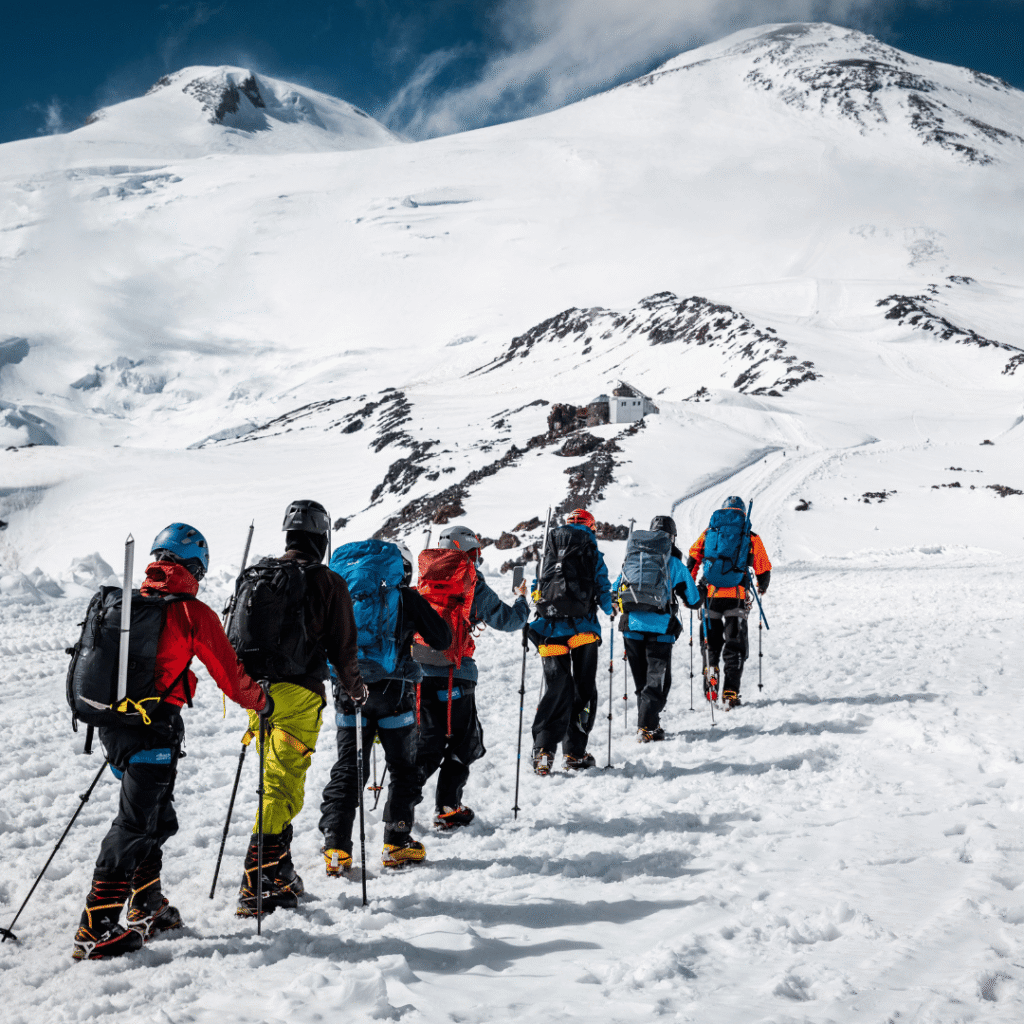
Our guide Ivan Alexeev was decisive to the expedition: not only did he know the route perfectly, but he consistently adopted a cautious and preventive approach to risk management that gave us great confidence. In addition to technical guidance, he delivered safety lessons and self-arrest techniques that proved invaluable to the entire group.
Some key points about the role of the guide on Elbrus:
- A guide can attend to a maximum of 3 people. If there are more members in your group, you will need additional guides. Don’t be convinced to head out in larger groups — individualized attention at high altitude is essential
- The assistant guide closes the group. On our expedition, the lead guide Ivan headed the ascent while assistant guide Mikhail brought up the rear. This structure allows the pace to be controlled and support to be given to whoever needs it
Elbrus is an isolated and highly exposed mountain: the Russian Balandrau
This is perhaps the most important warning in the entire article for anyone wanting to climb Elbrus. The mountain can present what appears to be a perfect morning and turn radically within a matter of hours. Its isolated geographical position in the Caucasus range makes it especially vulnerable to sudden and unpredictable weather changes.
We can call it the “Russian Balandrau”: a mountain that, when the wind turns, it really turns. The consequences of being caught by a weather shift mid-ascent above 5,000 meters, in an environment with no shelter and zero visibility, can be very serious. Therefore:
- Always check the weather forecast with your guide before making the decision to head out. Don’t go if there are any doubts
- The weather window rules. On our expedition we had to reorganize summit day based on the weather, sacrificing reserve days. It was the right decision
- Don’t underestimate the cold at the summit. Even in good conditions, at 5,642 meters thermometers can read well below zero. On our outing, at 4,700 meters during acclimatization, wind and temperatures dropped to -20 °C
- Always carry a complete set of technical equipment: crampons, ice axe, high-altitude warm clothing, and eye protection. As we explain in our guide on how to choose the best mountain boots for extreme climates, proper footwear for this type of ascent is non-negotiable.
Book 7 days, not 5: acclimatization cannot be improvised
This is one of the most valuable pieces of advice we can give you, and it comes directly from our own experience. Most commercial programs for Elbrus are offered over 5 days, and that is, in our opinion, insufficient.
Our recommendation is to look for programs of at least 7 days. The reasons are clear:
- Acclimatization above 5,000 meters takes time. The body cannot adapt to that altitude quickly, and those who don’t acclimatize fast will feel this especially
- With 7 days you have reserve days if the weather doesn’t cooperate on the planned summit day. On our 5-day expedition we put everything on one card: by Saturday we were already heading home. No room to maneuver
- Proper, gradual acclimatization significantly reduces the risk of altitude sickness, improves summit performance, and above all, improves the safety of the entire expedition
- The 7-day program also allows for real rest days to be interspersed between acclimatization outings — something our guide stressed: before the summit push, the priority is to rest, hydrate, and eat. Nothing else
To go deeper into how to prepare your body for altitude, we recommend our article on altitude preparation and hypoxic training.
The Elbrus base camp: better than you’d expect
One of the pleasant surprises of the trip was discovering that the Elbrus base camp at 3,888 meters is very well equipped. We’re not talking about tents in the middle of the snow, but solid facilities with four-person rooms perfectly insulated from the outside, a dining room with hot food, and everything needed to rest and recover between days on the mountain.
Russian mountain cooking deserves a special mention: highly caloric and energetic soups as the main course, followed by meat and vegetables. Simple, hearty, and perfect for the caloric demands of altitude.
If you have questions about how to rest better in this type of environment, our article on mountain rest tips covers everything you need to know to make the most of your nights at base camp.
The access route: Georgia as the gateway in and out
The most common access to Elbrus for European travelers goes through Tbilisi (Georgia) as a stopover, with flights from Istanbul or other European cities. From Tbilisi, a short flight of around 60 minutes takes you to Mineralnye Vody (Russia), from where it’s about a 3-hour minibus ride to the Elbrus area.
Our recommendation: make the most of your time in Tbilisi if your itinerary allows it. It is an absolutely safe, fascinating city, full of contrasts between modernity and tradition, with an extraordinary culinary scene. Khachapuri — a boat-shaped bread filled with melted cheese and topped with an egg yolk and butter — is one of those gastronomic experiences you won’t forget.
It’s also worth bearing in mind that leaving Russia by land is also possible if circumstances require it. In our case, the cancellation of our return flight forced us to cross the Caucasus by road on a 9-hour journey to Georgia — a route that turned out to feature some of the most breathtaking scenery we have ever seen. Unpredictable, but unforgettable.
Russia: a country that commands respect and gives you an unrepeatable life experience
Setting foot on Russian soil is imposing. It’s a mix of excitement and unease that is honest to acknowledge. The country lives a complex political reality and in many corners you feel that sense of being somewhere trapped in time, marked by rigidity and fear.
And yet, the people. The Russian people are the great contradiction and the greatest gift of this trip. Generous, noble, hardworking people who look after you without asking anything in return, doing everything possible to make you feel welcome despite the language and cultural barrier. Closed in the political sphere, yes — but open in the human sense in a way that is rare to find elsewhere.
At Top Summits of the World, we left Russia with a backpack full of contrasts, reflections, and a summit that symbolized much more than 5,642 meters of altitude. If you dare to take on this adventure, go well prepared, go with humility, and go ready to be surprised by Russia in ways you didn’t expect. See you at the summits! 🏔️
OUR LATEST PUBLICATIONS
Tips for travelling to Norway: everything we wish we had known beforehand
Learn from our experience to get the most out of one of the most fascinating countries on the planet. At Top Summits of the World,
Tips for Resting in the Mountains: How to Sleep Well at High Altitudes
Because recovering properly is just as important as climbing well At Top Summits of the World, we’ve seen it expedition after expedition: you can have
The Himalayas: the roof of the world
Where the Earth touches the sky In Top Summits of the World there are mountain ranges that we admire, others that challenge us and some