SUMMITS
SUMMIT Nº 30: Gaizinkalns (Latvia)
LATVIA

Gaizinkalns

09/11/2025
ALTITUDE
312m

ANNA CAPDEVILA AND ANDREU LÓPEZ

DIFFICULTY LEVEL
LOW
CHRONICLE
It’s Friday, and the air is thick with the sounds of the airport and the anticipation of a getaway. My flight departs at 2:00 PM from Terminal 2 at El Prat Airport, so I have a couple of hours to spare before heading there. In just over a month and a half, I’ll be off to Latin America to attempt the ascent of Aconcagua in Argentina, as well as Ojos del Salado in Chile. I’ve already done an hour on the stationary bike, which, along with the hypoxia machine, allows me to simulate altitudes of up to 6,500 meters and will help with acclimatization. But now’s not the time to talk about Argentina or Chile; it’s Latvia’s turn, the chosen destination, along with the “rookie” (in this project) Anna Capdevila.
Anna Capdevila and I met on a mountain hike, and since then she’s become one of my closest and most sacred friends, so we walk this path together. She’s been dealing with a very difficult situation on a personal level for the past few months, and I was so happy when she told me last August that she wanted to do a Top Summits climb. And since I’m a highly receptive and empathetic person when it comes to travel, here we are… waiting for the 3-hour and 40-minute Air Baltic flight to Riga, the capital of Latvia.
Latvia is located in the Baltic Region and borders Estonia to the north, Lithuania and Belarus to the south, and Russia to the east, as well as sharing a maritime border with Sweden. It became an independent country in 1991, coinciding with a democratic movement in the Baltic states and the subsequent dissolution of the USSR (ending 45 years of a socialist republic). The Latvian population totals approximately 1.9 million people, and its capital, Riga, has just over 600,000 inhabitants.
Although the Air Baltic flight from Barcelona to Riga covers a distance of over 2,500 kilometers, time flies by (literally). Anna is someone who takes great care of the people and communities around her and makes everyone’s experience better, including the Barcelona-Riga flight, by bringing a crossword puzzle magazine and some sweets for when we get stuck and can’t find the solution.
Riga airport isn’t very big, and it’s not too difficult to find the Europcar offices, the car rental company for the project. Anna will be driving. I don’t like to drive, but she does, so our travel partnership begins with understanding and a well-complemented team.
The Wellton Riverside SPA Hotel boasts a prime location on the banks of the Daugava River, which flows for 1,020 kilometers before emptying into the Gulf of Riga, just over 15 kilometers past the city center of Riga. We are also situated next to Riga’s historic center, a UNESCO World Heritage Site.
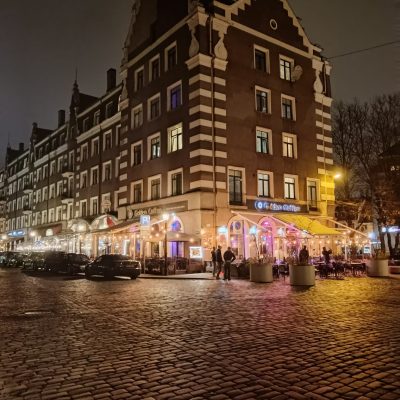
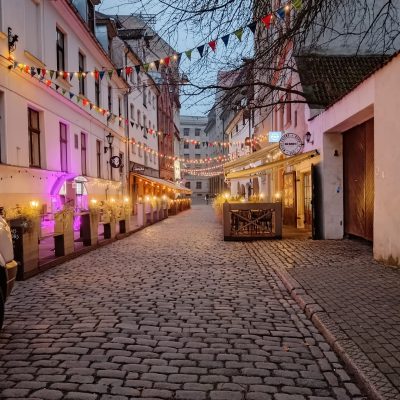
We left our luggage in our room and immediately headed to Riga’s historic center to explore the local cuisine. With a good nose for good food, we chose a restaurant with tasteful decor, friendly staff, and expertly prepared dishes.
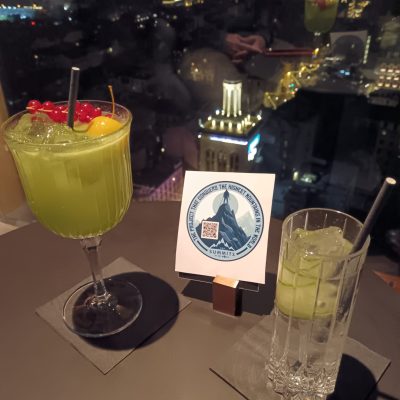
After a brief stroll through the city, we took the next step in our culinary exploration, eventually arriving at the 26th floor of the Radisson Hotel. From the Skyline Bar, we enjoyed one of the best views of the city. I opted for a cocktail of rum, kiwi, watermelon, and melon, a daring choice that turned out to be a resounding success.
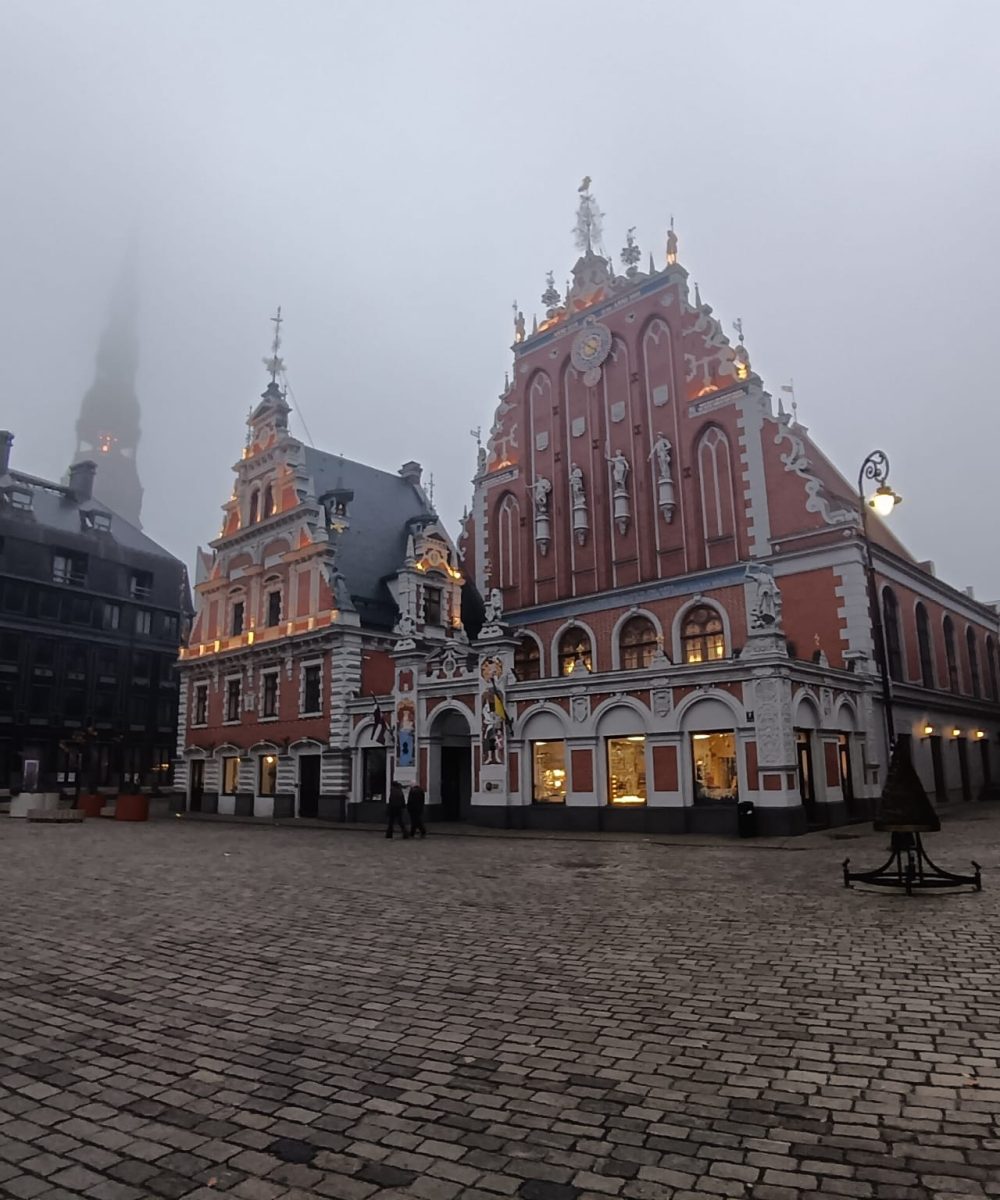
We won’t linger too long, since on this express Baltic getaway we’ll be living in accordance with the few hours of daylight—”sunlight” in quotes, since we won’t see it at all during the trip. The sun rises in Latvia at this time of year, when we’re traveling, at 7:30 a.m. and sets at 4:30 p.m., given our fairly northerly latitude. So, the first hour of those two times will mark when we need to be up and about, and the second will act as the limit for our urban exploration. In short, we’re going to sleep impatient and eager to discover this beautiful city, which has given us such a promising start.
At 7:30 a.m., we’re awakened by the light filtering through the curtains, confirming that the blinds still have many territories to conquer. Anna has planned the trip meticulously, and we have a “roadmap” with the city’s main points of interest. We began by braving the frigid Baltic temperatures and heading to Riga’s Central Market, which, with its more than 72,000 square meters and over 3,000 stalls, is the largest covered market in Europe. And within those 72,000 square meters, we were resourceful enough to find food and breakfast, since we hadn’t managed to do so at the hotel.
The proximity to the Baltic Sea meant a constant breeze, making the wind chill feel very low. However, one must remain positive, and the low temperatures of a Baltic November meant there were few tourists on the streets, allowing for a peaceful and refreshing visit to the city.
Leaving the market, with its stark, austere, very Soviet-style architecture, we followed the course of the Daugava River, crossing the main bridge and leaving the historic center behind us. Before us stood the spectacular and modern Riga National Library, housing over 4 million books and offering panoramic views of Riga’s historic center, weather permitting.
We continued on until we reached the Riga Ferris Wheel, an imposing and massive structure where, to be sure, there were zero tourists—fog and Ferris wheels simply don’t mix. We missed the Ferris wheel, but instead encountered a surprise: a pink building with striking blue domes appeared before us—none other than the Orthodox Trinity Church. After visiting so many countries, I can confirm that I like the style of Orthodox churches.
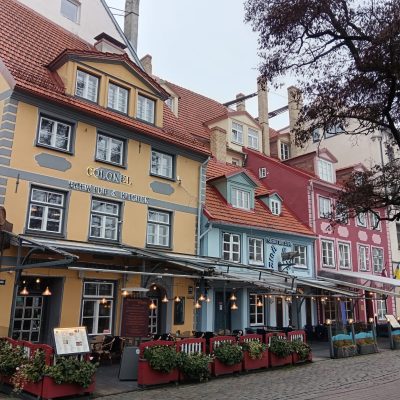
We retrace our steps and cross the bridge again, intending to visit Riga Castle. However, I’m not sufficiently prepared for this endeavor, nor is my presence intimidating enough for the guard to grant me access (to put it more bluntly, Riga Castle is not open to the public). This isn’t a problem, though, as Riga’s historic center is a constant spectacle of beauty. In a short time, the following highly recommended sights pass before our eyes:
- The House of the Three Brothers: located at numbers 17, 19, and 21, it is said that they were built by members of the same family at different times.
- Riga Cathedral: built as a Catholic church in the early 12th century, it later became Lutheran, then Catholic again, and of course, Lutheran once more.
- After the match ended in a 2-2 draw, Catholicism won 3-2 in extra time, and the beautiful building now serves as a Catholic church.
- Nativity of Christ Orthodox Cathedral: arguably the most impressive church in Riga, a stunning white and gold cathedral.
- Freedom Monument: a historical monument built in honor of the soldiers who died in the Latvian War of Independence between 1918 and 1920.
We’ve been wandering the Latvian streets for far too long now, and it’s time for a bit of “interior design.” Anna spots a tiny blue-fronted building that turns out to be a new culinary gem. The dimly lit, tranquil atmosphere, accompanied by soft background music, is perfect for enjoying local cuisine, expertly guided by a friendly and attentive local waiter.
We leave the restaurant around 4:30 pm, with just over two hours of daylight left, which, given what we’ve seen, is definitely worth making the most of. We still have tourist attractions to visit, and in these last hours of daylight, we’ll discover the following points of interest:
- House of the Cats: a curious house with a cat on the roof and a legend behind it that, real or imagined, has become an icon of the city over time.
- Swedish Gate: built at the end of the 17th century and also with a curious story behind it.
- Sculpture of the “Bremen Town Musicians,” a gift from the city of Bremen to Riga in 1990 to celebrate the sister city ties.
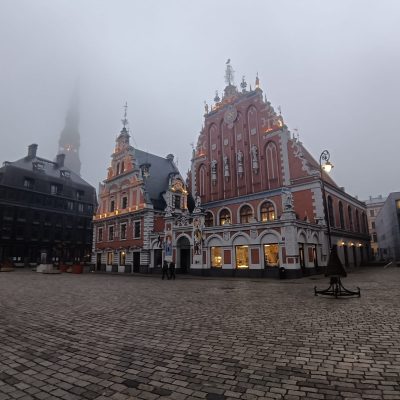
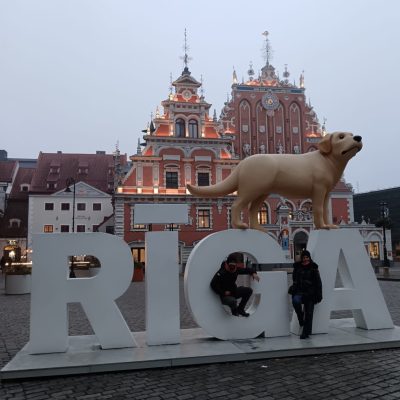
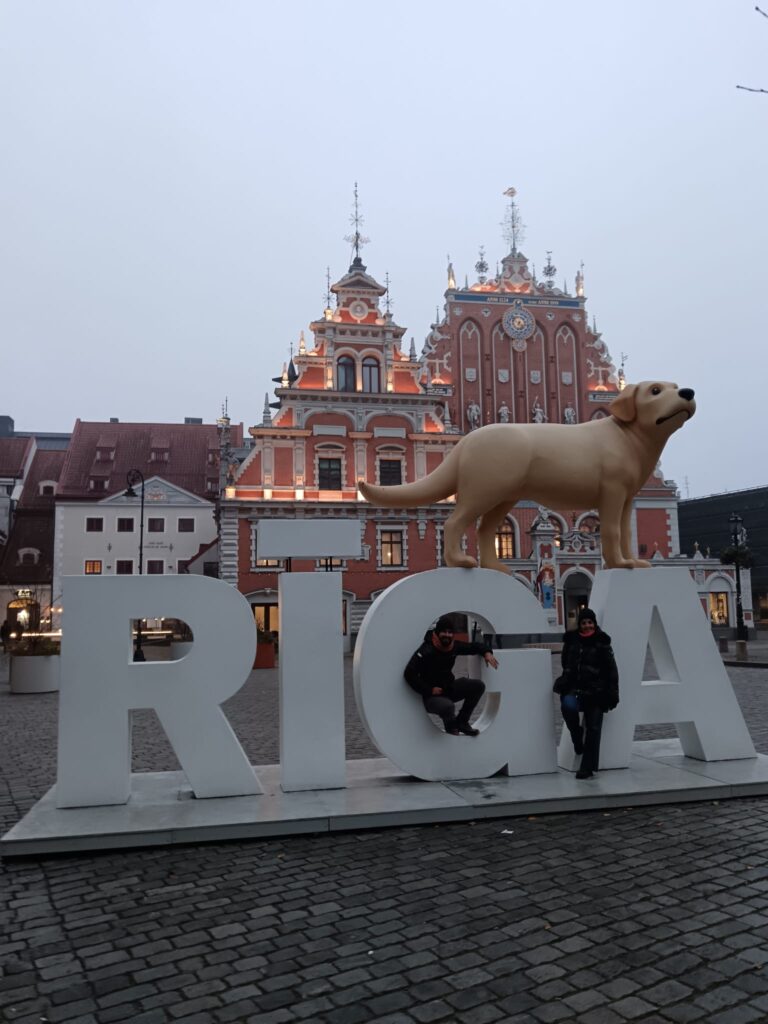
- House of the Blackheads: surely the most important place to see in Riga, it was built at the beginning of the 14th century as the headquarters of an order of unmarried merchants called the Blackheads.
And I think it’s only fair that after such a full day of sightseeing, we’ve earned a well-deserved visit to the hotel’s spa. A bit of sauna, jacuzzi… will do us good to recover after having “survived” a long day of immersion in the Baltic climate.
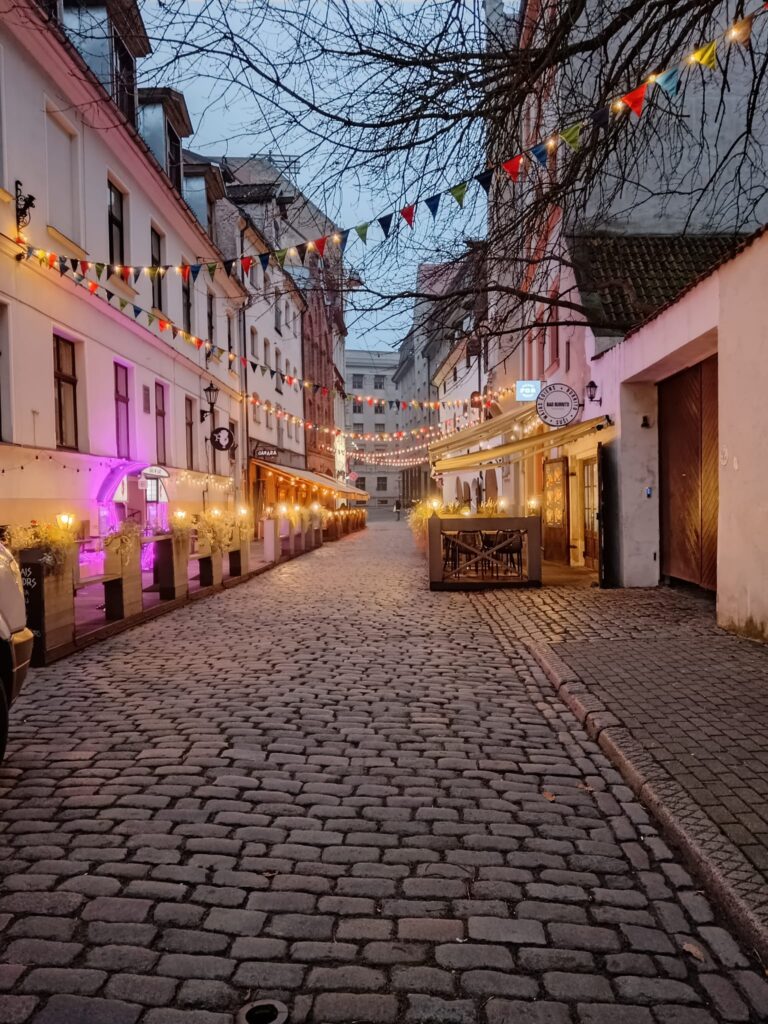
The spa visit was a wise decision. But will choosing an Uzbek restaurant in the heart of Riga be just as good? Well, while the place has a great atmosphere and the paintings on the walls and the colors are striking, we can’t say the same about the dishes that are being served, which we’d rate as good, average, or just okay.
We leave the restaurant; it’s not even 11:00 PM yet, but the streets have a nauseating, alcoholic aroma. We’re literally blown away. It feels like we’re in the middle of the San Fermín festival, where everyone’s completely wasted… well, it’s all strategies to combat the cold in this life. Ours doesn’t involve this, so we go to sleep because tomorrow is Top Summit day, and also flight day back home. This trip is a whirlwind, but we’re making the most of our limited time.
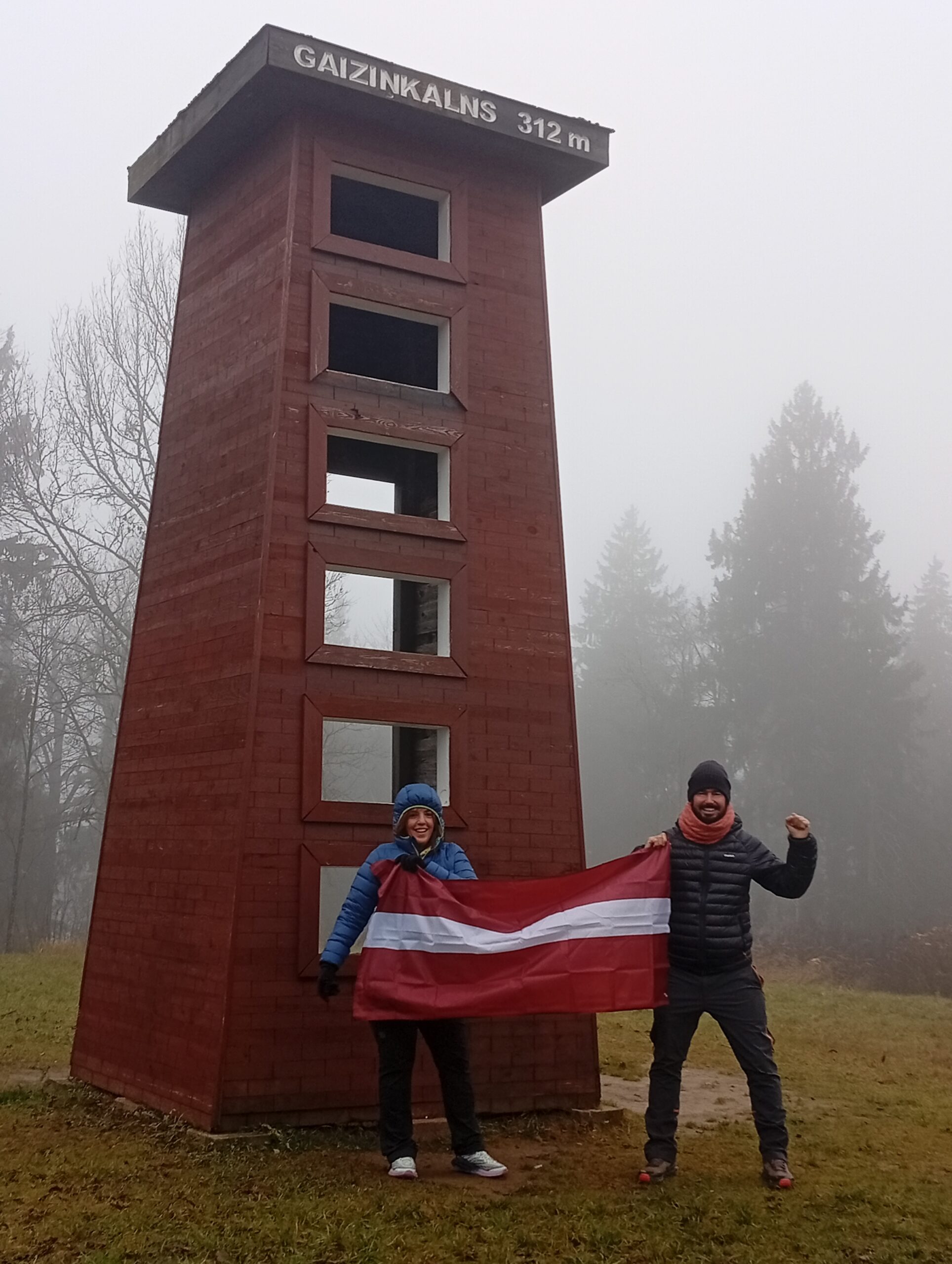
Today we have to hurry if we want to do everything we’ve planned, especially catching our flight back to Stockholm-Arlanda Airport, where we have a risky layover between the Riga-Stockholm and Stockholm-Barcelona flights, leaving us only 60 minutes between them. But let’s not get ahead of ourselves and take things one step at a time, as this morning we’re headed to Gaizinkalns, which, at 312 meters, is the highest peak in the country. Most of Latvia lies below 100 meters above sea level, and the country’s interior is made up of vast plains, wastelands, and marshes, as well as many fertile areas, with very few hills.
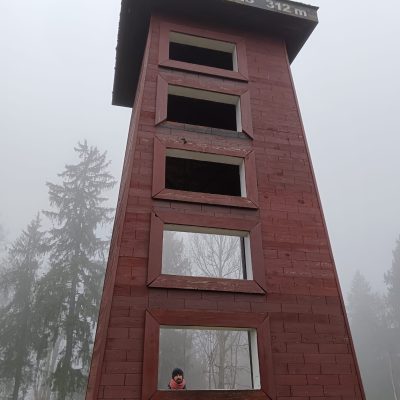
The summit of Gaizinkalns is near the city of Madona, in the east of the country, and it takes us two hours to reach it in our KIA. The route starts next to a mountain refuge and some ski facilities. At 312 meters high, the Latvians won’t be competing with the ski slopes of the Alps, but it’s better than nothing, they say. The route to the summit presents absolutely no difficulty, as the 900 meters between the start of the trail and the top can be covered in exactly 10 minutes. I conducted an extensive, but largely unsuccessful, search for longer routes, so what we’ll remember most about this Baltic outing is not so much the summit itself, but the journey we shared with Anna to reach it.
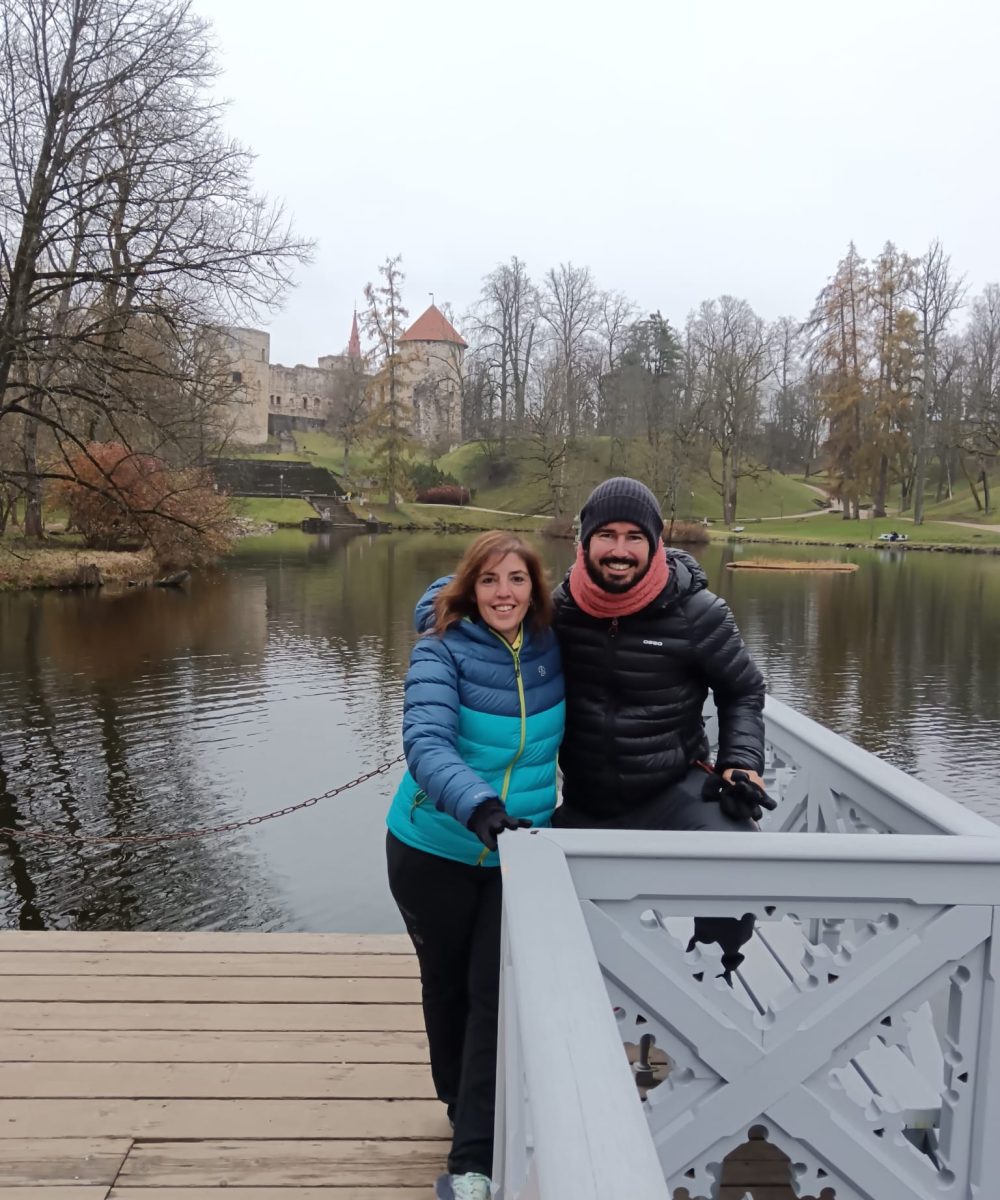
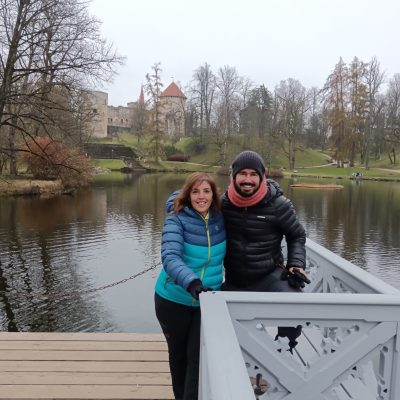
It wasn’t planned due to lack of time, but since the route is so short, we decided to return to Riga after stopping in Cesis, a small town located about 90 kilometers from the capital. It boasts very well-preserved medieval architecture, and you shouldn’t miss Cesis Castle and the Castle Park.
Well, I suppose the mystery of the Arlanda-Barcelona flight remains to be solved. We stepped off the Riga-Arlanda plane at 6:45 PM, just 30 minutes before the scheduled departure time for the Arlanda-Barcelona flight. At 6:58 PM, we were on the plane that was supposed to take us home; that is, we completed the plane change in just 13 minutes—simply masterful. Needless to say, we celebrated our success by jumping and hugging each other…the odds were against us, and it’s safe to say that taking this second flight was the true highlight of the day.
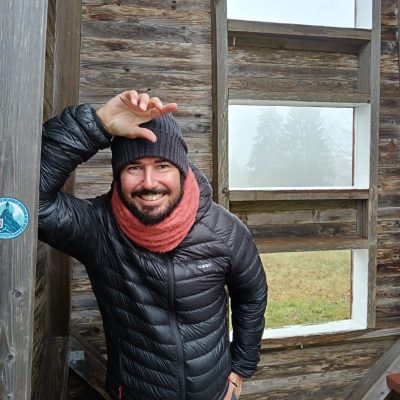
And that concludes this short but incredibly well-spent Baltic experience. I’m so happy Anna has joined the TSOW project. The 312 meters of Gaizinkalns are no less valuable than previous destinations at higher altitudes; behind every country and journey lies a story, an adventure, another chapter in this great work that is being written. The work had to have a chapter in which Anna was present, and she has been in chapter 30, a very special number that reflects the project’s growth and its increasing scope and scale.
GALLERY